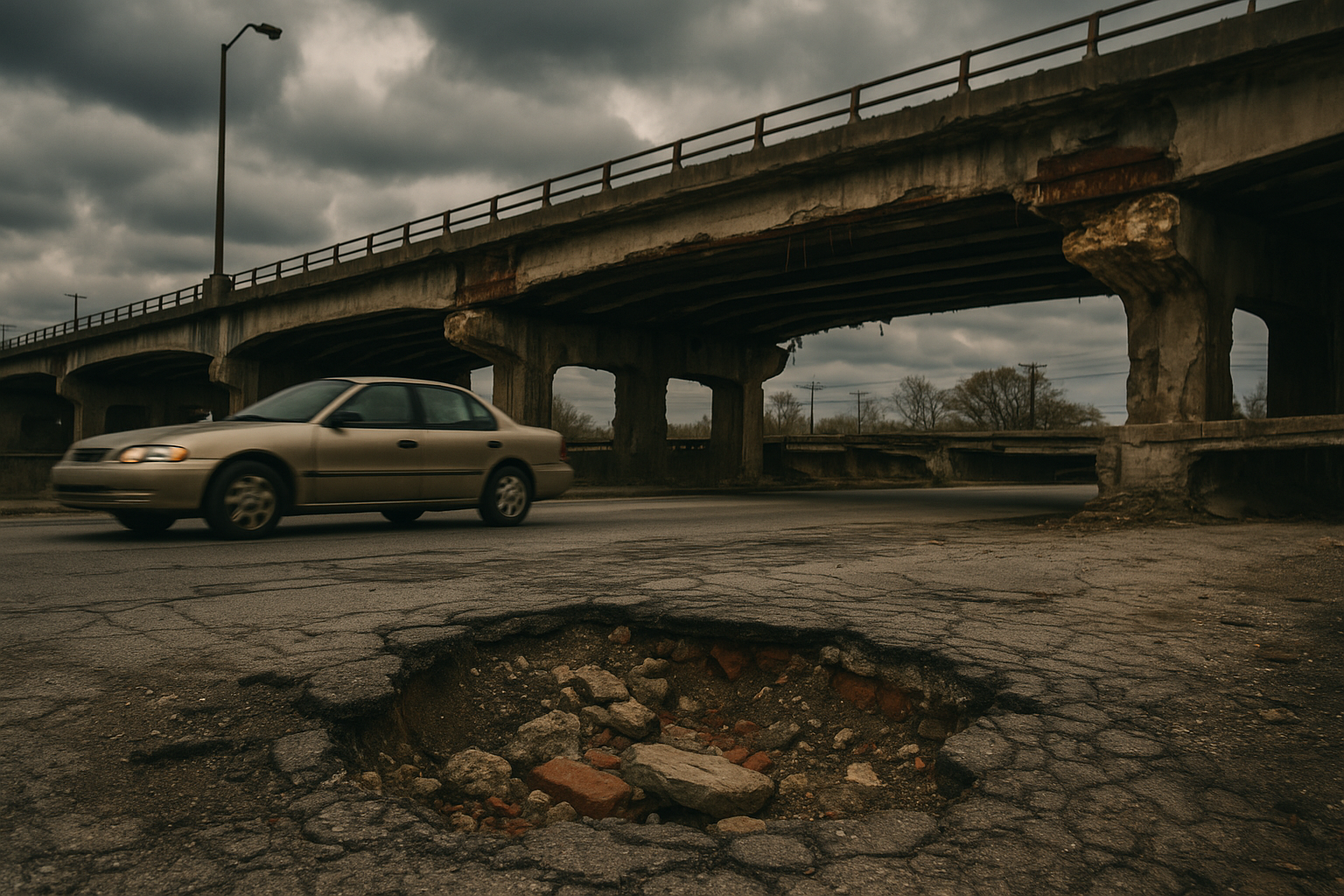
Every pothole you swerve around, every detour you take, every minute spent idling in traffic—these aren’t just minor inconveniences. They’re symptoms of a much larger problem that’s quietly draining thousands of dollars from American households each year.
The true cost of America’s deteriorating infrastructure doesn’t appear on any tax bill or government ledger. Instead, it shows up as unexpected car repairs, wasted fuel, lost productivity, and in some cases, serious health consequences. Understanding these hidden costs reveals why infrastructure investment isn’t just about fixing roads—it’s about protecting family budgets.
The Vehicle Damage Tax
American drivers pay an average of $600 annually in extra vehicle repairs and operating costs due to poor road conditions. In some metropolitan areas, that number exceeds $1,000 per driver. Potholes don’t just create jarring bumps—they damage tire sidewalls, throw wheel alignments off balance, and destroy suspension components.
These aren’t luxury repairs either. A single pothole encounter can result in a bent rim costing $200 to replace, or a damaged tire requiring immediate replacement at $150 or more. For families living paycheck to paycheck, these unexpected expenses can mean choosing between fixing the car or paying other bills.
The problem compounds in states with harsh winters, where freeze-thaw cycles accelerate road deterioration. Cities like Detroit, Milwaukee, and Pittsburgh see some of the highest vehicle damage costs in the nation, creating an invisible regressive tax that hits working families hardest.
Time Is Money—And We’re Wasting Both
Traffic congestion costs the average American commuter 54 hours per year—more than a full work week spent sitting in traffic. That’s time that could be spent with family, on side projects, or simply resting. But beyond the quality-of-life impact, there’s a real financial cost.
Wasted fuel from stop-and-go traffic and inefficient detours around construction zones costs American drivers approximately $88 billion annually. For an individual driver, that might mean an extra $300 to $800 per year at the pump, depending on commute length and local traffic conditions.
Analysis from American Infrastructure Partners has shown that businesses feel this pain too, and they pass costs along to consumers. Freight delays due to poor infrastructure add an estimated $49 billion to the cost of goods annually. That’s reflected in higher prices for everything from groceries to furniture, making inflation harder to combat and stretching household budgets thinner.
The Water Crisis Hiding in Plain Sight
While roads grab headlines, America’s aging water infrastructure presents an even more urgent crisis. The nation’s water systems see a main break every two minutes, wasting 6 billion gallons of treated water daily—enough to fill 9,000 swimming pools.
For homeowners, the consequences can be devastating. A water main break can flood basements, damage foundations, and destroy personal property. Insurance may not cover all damages, leaving families with thousands in out-of-pocket costs. Even without catastrophic failures, inefficient water systems mean higher utility bills as treatment plants work harder to compensate for leaks and contamination.
The health costs are harder to quantify but potentially more serious. Lead contamination from aging pipes, as seen dramatically in Flint, Michigan, affects thousands of communities nationwide. The long-term health effects, particularly on children’s cognitive development, represent costs that will be borne for generations.
The Cascade Effect on Property Values
Infrastructure quality directly impacts property values, yet homeowners often don’t connect the dots until it’s time to sell. Homes in areas with failing infrastructure—poor roads, unreliable water, inadequate stormwater management—can see property values decrease by 10% to 20% compared to similar homes in well-maintained areas.
For a family with a $300,000 home, that represents $30,000 to $60,000 in lost equity. This hidden cost affects wealth building, retirement planning, and the ability to use home equity for education or emergencies. It’s a silent wealth transfer from homeowners to the void of neglect.
Businesses make similar calculations. When companies choose where to locate or expand, infrastructure quality ranks among the top factors. Communities with deteriorating infrastructure lose economic opportunities, which means fewer local jobs and lower tax revenues—creating a vicious cycle that makes infrastructure improvements even harder to fund.
The Compounding Interest of Neglect
Perhaps the most insidious aspect of deferred infrastructure maintenance is how costs multiply over time. An ounce of prevention truly is worth a pound of cure—engineers estimate that every dollar not spent on timely maintenance results in $4 to $5 in eventual reconstruction costs.
A road that could have been resurfaced for $250,000 ten years ago might now require complete reconstruction at $1.5 million. A water main that could have been replaced proactively for $500,000 might cost $2 million after it fails, accounting for emergency repairs, property damage, and service disruptions.
American taxpayers will ultimately pay these inflated costs, either through higher taxes, increased debt, or continued deterioration that further multiplies future expenses. The question isn’t whether we’ll pay—it’s whether we’ll pay now while it’s manageable or later when it’s catastrophic.
Moving Forward
The conversation about infrastructure investment often gets mired in political debates about spending levels and priorities. But at its core, infrastructure maintenance isn’t about ideology—it’s about mathematics. Pay now or pay much more later.
For American families, every year of delay means more money out of pocket for vehicle repairs, more time wasted in traffic, higher prices at the store, and decreased property values. These aren’t abstract policy concerns—they’re real costs affecting real household budgets.
The good news is that infrastructure investment is one of the few areas with genuine bipartisan support among voters. Americans across the political spectrum understand that safe roads, clean water, and reliable utilities aren’t luxuries—they’re foundations for economic prosperity and quality of life.
The hidden costs of crumbling infrastructure are finally becoming visible. The question now is whether we’ll act decisively to address them or continue allowing American families to pay the price of neglect, one pothole at a time.